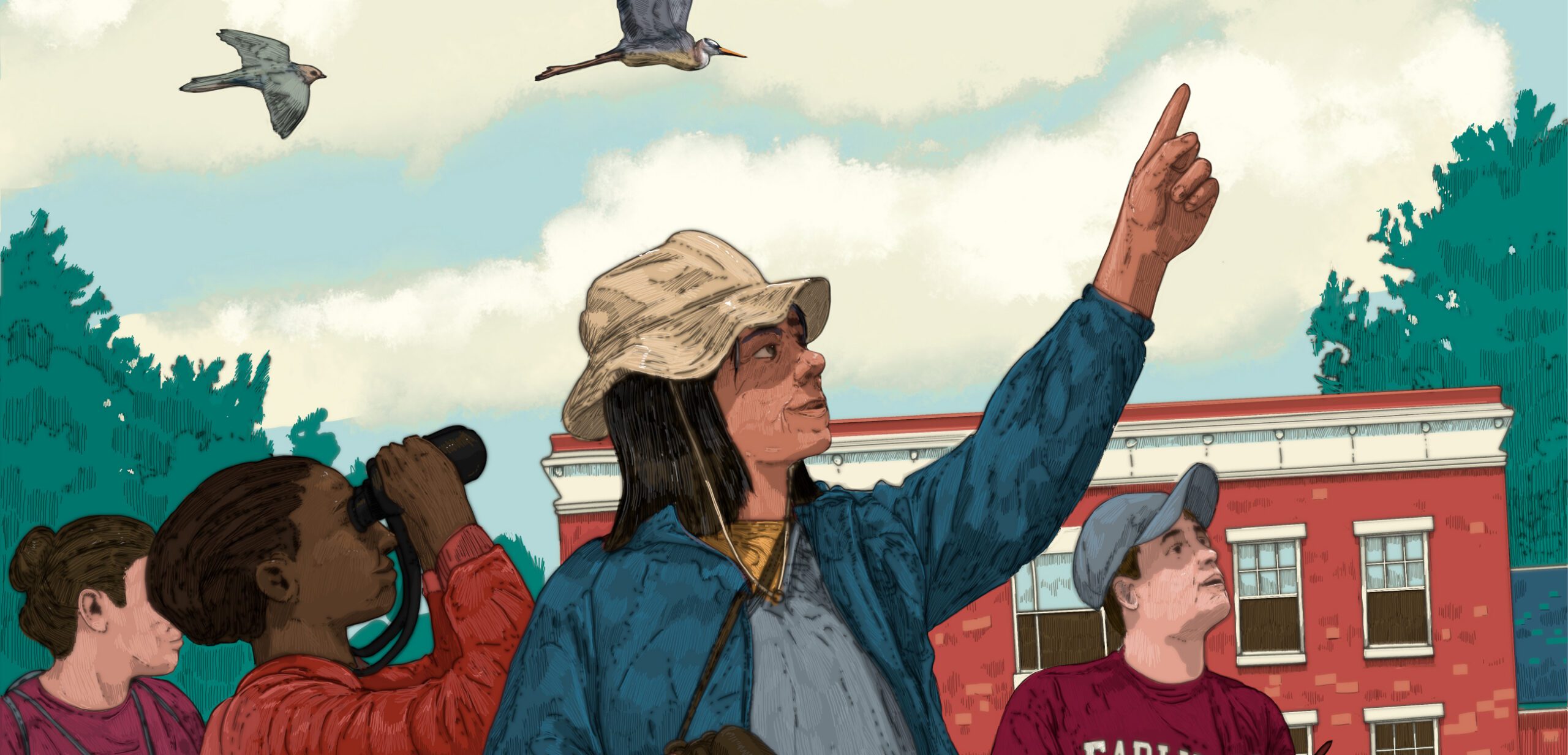
A love of birding shapes the Earlham experience and provides a skyward frame for academic pursuits in the field.
The long-eared owl, with its ear tufts and perpetually surprised expression, is a shy and secretive bird rarely seen in Indiana. So when word spread on a brilliant fall day that one was roosting on Earlham’s back campus, the news electrified the College’s bird-loving community.
And that community is large.
Students, retired faculty, professors, and Richmond residents flocked to the site to marvel at the visitor, from a respectful distance of course. Among them was Wendy Tori, professor of biology and Martha Sykes Hansen Endowed Chair in Ornithology. She had a meeting scheduled with her ornithology teaching assistant, Harley Pickett ’26, but the owl changed their plans. “Birds bring people together – everybody. Whatever you were doing, nothing was more important. That’s a super cool thing that happens here.”
Jaime Coon, assistant professor of biology and environmental sustainability, also dropped everything that day. “We show up for the birds,” she said. “We were in community there, just looking at this rare, beautiful long-eared owl. That just shows you – birds are a thing here. When the email goes out, we all run.”
At Earlham, birding and ornithology courses are popular with students, regardless of major or future plans. The owl incident is a vivid example of how that passion comes to life. The students and professors who went to back campus armed with binoculars, telescopes, cameras, and notebooks might not have been in a classroom, but they were somewhere equally important: in nature, where the owl belongs.
It was the kind of experiential learning that sparks curiosity and leads to deep, self-directed inquiry, the same blend of scientific clarity and genuine excitement that has long made Earlham a haven for bird-lovers and a launchpad for careers in wildlife research. The owl’s brief visit served as a reminder of how faculty, students, alums, and important annual events like Birding Big Day all contribute to a community where a love for birds isn’t just encouraged — it thrives.
Tending the seeds
Values that make good naturalists — truth-seeking, stewardship, respect for nature, awareness of life’s interconnectedness — have long been nurtured at Earlham. Joseph Moore, the College’s second president, studied with leading biologists of his day, and his natural history collection formed the basis of the Joseph Moore Museum. Among the College’s notable alums is ecologist W.C. Allee, Class of 1908, a pacifist and pioneer of research in social ecology.
More recent alums have also helped the field, including Carrie Seltzer ’04. She works as the head of engagement at iNaturalist, an online social network of people sharing biodiversity information to help each other learn about nature. Another influential Earlham figure is Bill Buskirk ’66, emeritus professor of biology, whom Coon describes as “absolutely a legend.” As a student, Buskirk reveled in experiential learning: spring break wildflower trips to the Smoky Mountains with botanist Carolle Markle, and cave expeditions to southern Indiana and Kentucky to study bats with biology professor and museum director Jim Cope.
He has an indelible memory of Cope handing him an armful of bats to band. It was the kind of moment that equalized the relationship between student and teacher, something that Earlham, with its focus on student-faculty collaboration, research, and relationship, aims for.
“It’s those things that have really shaped me and given me models I wanted to follow,” Buskirk said. During his 34 years on the faculty and years of post-retirement field trips for alums and friends, Buskirk has seen both continuity and change. Through it all, experiential learning and ornithology continue to be a singular thread woven through the biology curriculum.
“The main thing I love is that it gets students outdoors and in touch with the organisms that share the earth with us,” he said. “Bird watching develops skills, requires study, and gives people enjoyment from seeing something always fresh and changing. Hopefully, it’s the spark that starts their interest in bigger things.”
Fanning the spark
For Tori, Coon, and Melanie Kazenel, assistant professor of climate change ecology, continuing Earlham’s legacy of field biology matters. Most of their courses include extensive fieldwork including collecting data, observing animals and plants, and understanding how they interact with people.
“A lot of how we look at ornithology and field biology is hands-on and experiential,” Tori said. “It gives students a sense of purpose and belonging. It blends rigorous training with a supportive culture.” It’s also rare for a small liberal arts college to have multiple scientists on the faculty who are entirely focused on field ecology, with funds available to them to support their research.
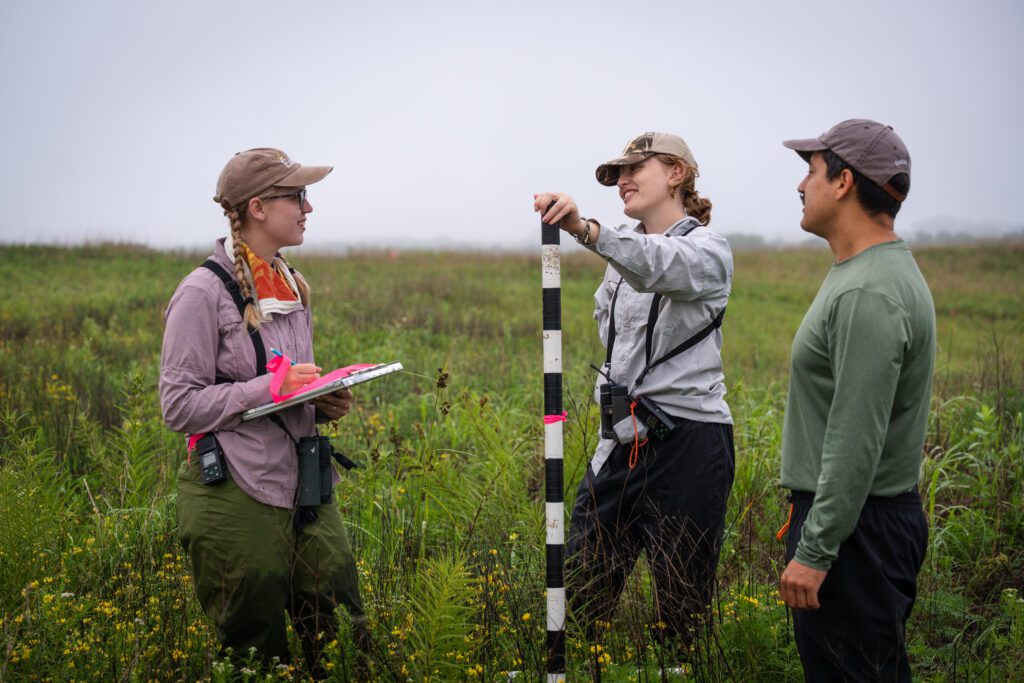
Tori, Coon, and Kazenel all teach Ecological Biology, nicknamed EcoBio, which is one of the most popular courses on campus. The course has a long-standing history of engaging students in their own self-directed, hands-on field research, with students spending a month collecting and analyzing their own data that they then present to the class and professor.
“There’s often a spark,” Coon said. “It doesn’t always mean, ‘I’m going to be a bio major.’ It means, ‘I understand my place in the natural world now.’ Earlham’s interdisciplinarity means we have art majors in our bio classes and bio majors in art classes. They’re in it for the love of the game.”
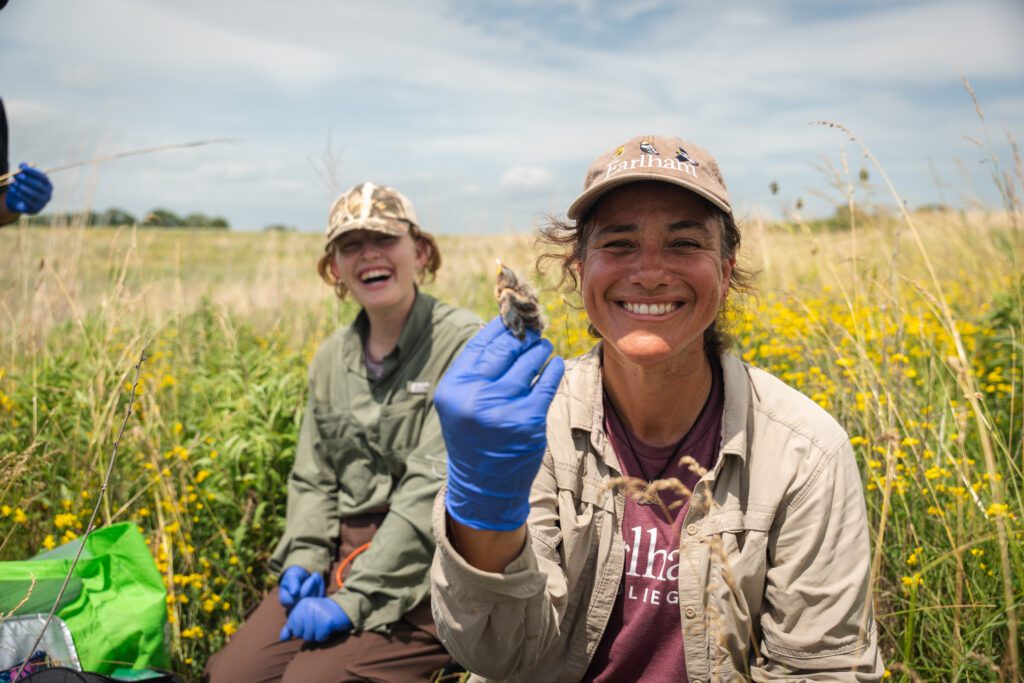
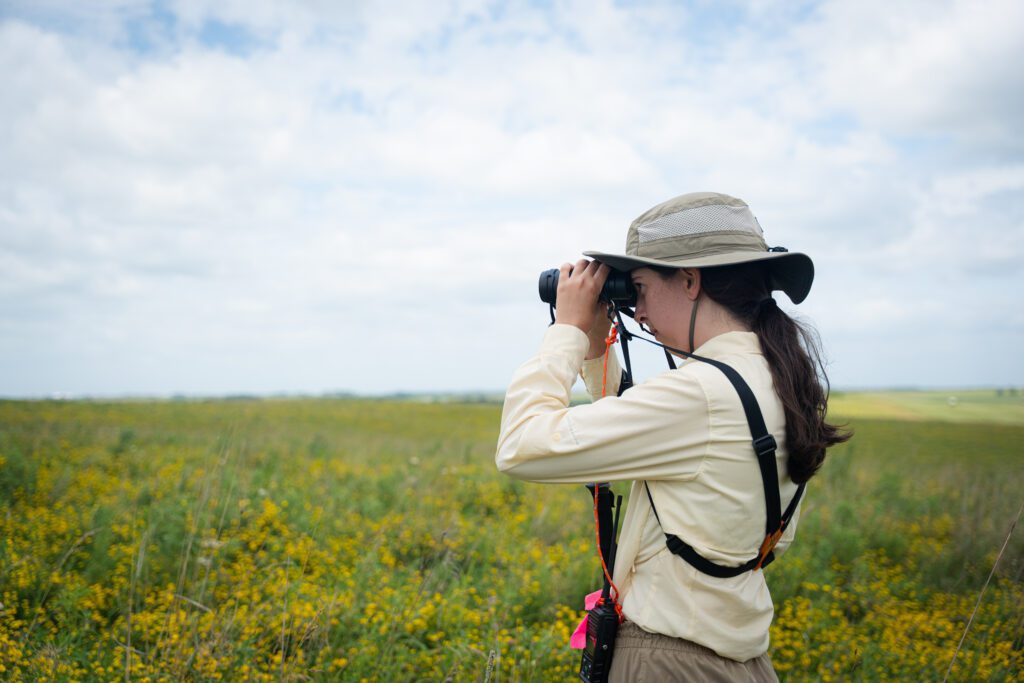
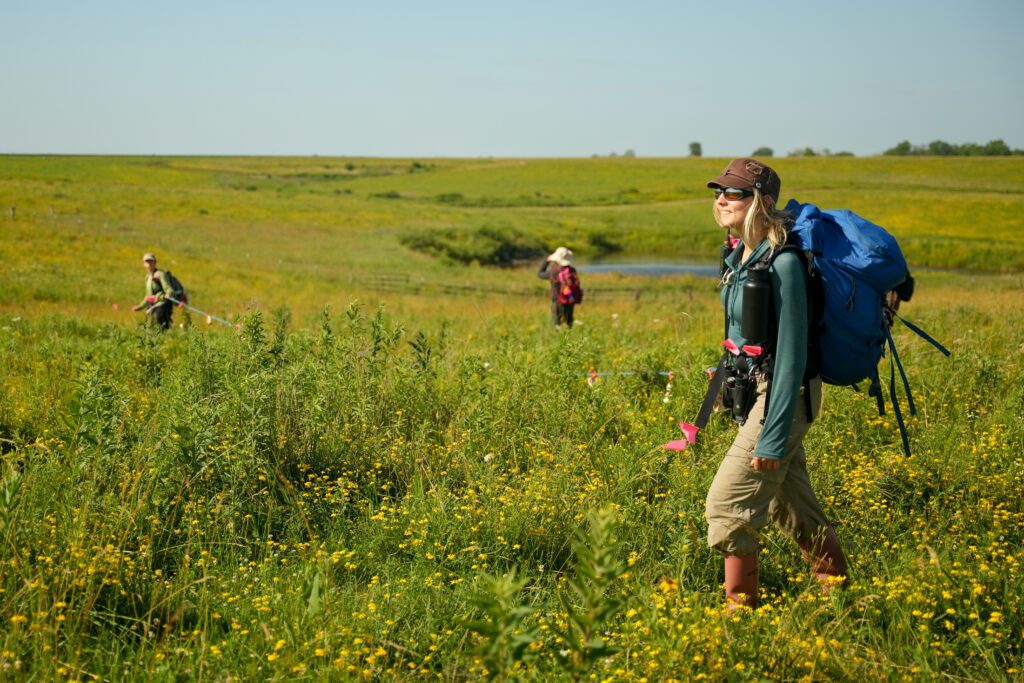
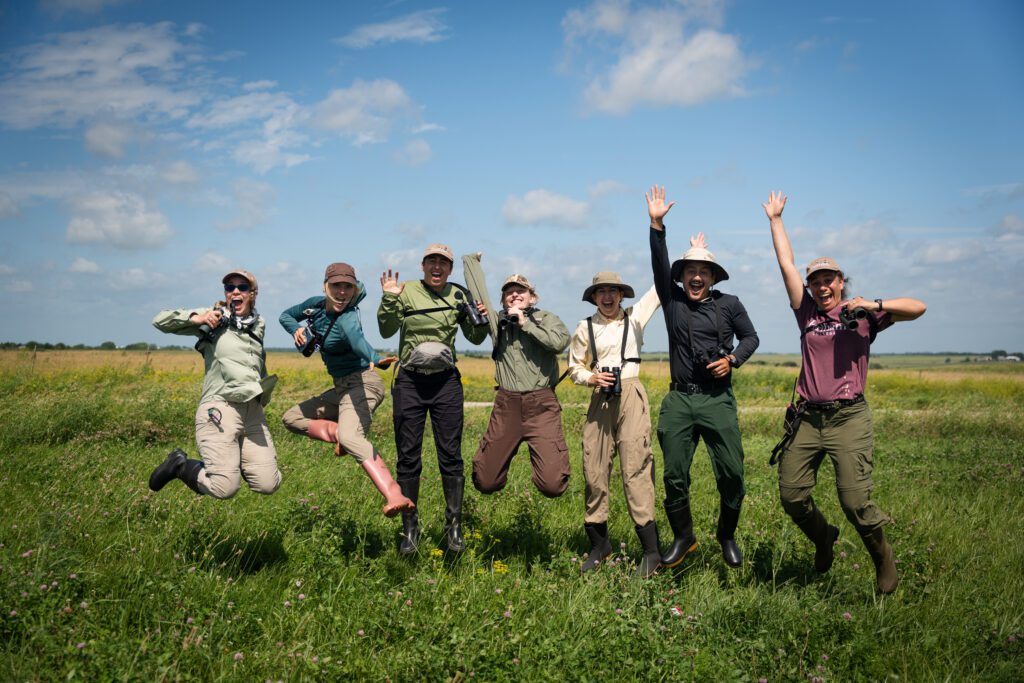
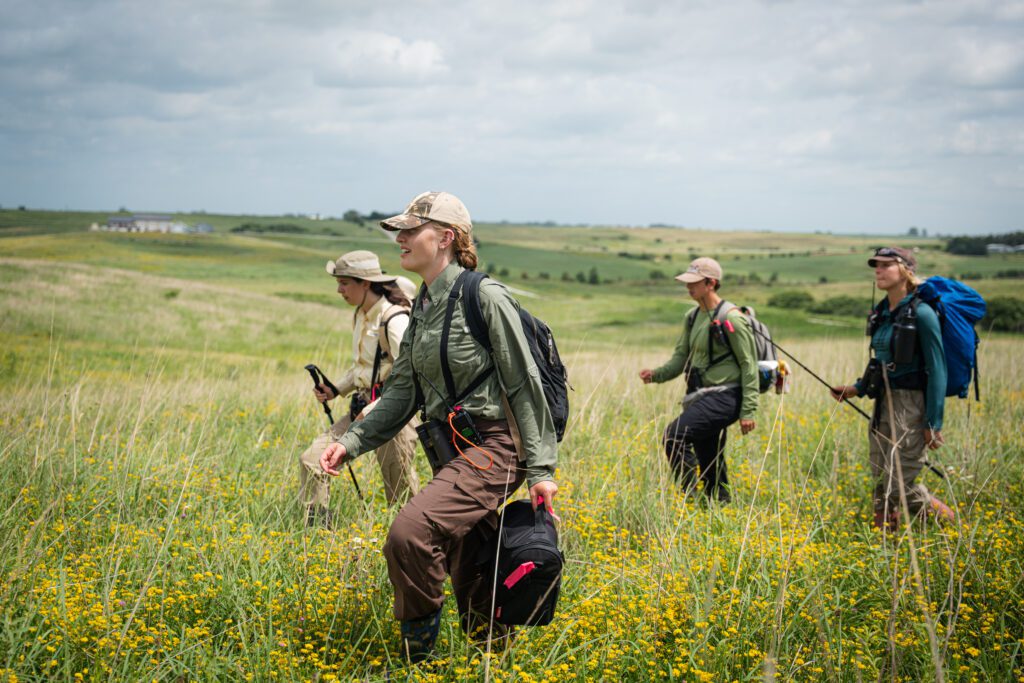
Many students follow that spark. Every summer, Tori and Coon take up to six students into the field for two months of grassland bird research, and many of the students they teach continue on to graduate school and pursue opportunities for research and study in places such as Borneo, Namibia, and Peru. From their first year, students learn how to think like scientists.
“When you go into the field and you hear a bird sing, and you observe its behavior, you start to understand your relationship to that bird in a very different way. You learn how to ID it, and recognize it, and greet it as a friend in the future,” Coon said. “That’s something that I think is special about how we teach field science here.”
“We all become lifelong collaborators,” Coon said. “We have WhatsApp groups upon WhatsApp groups, and we send each other photos of cool birds we see.”
Nurturing a sense of place
The spark has become a flame for students such as Sarah Osburn ’28 and recent alums such as Hannah Grushon ’23.
Osburn arrived at Earlham already interested in birds, but didn’t realize how central they were to campus culture. “I’d say that’s the main way I’ve made more of a community here,” she said.
A freshman-year natural history trip to Goose Pond Fish & Wildlife Area in Linton, Indiana, where the group saw more than 70 species, deepened her enthusiasm. She joined the grassland bird research project last summer, plans to start an ornithology club on campus, and hopes to work in wildlife conservation one day. In her animal behavior research project during the fall semester, Osburn investigated optimal foraging behavior in birds with the help of a feeder situated in back campus.
“Birds are so accessible, and they help you know more about where you are. And there are always birds,” she said. “Yesterday it was 20 degrees, windy, almost snowing, and that was the day we got the most birds at the feeder.”
Grushon, who is pursuing a master’s degree focused on birds at the University of Illinois Urbana-Champaign, grew up watching birds with her mom in their backyard. It was EcoBio and ornithology, both taught by Tori, that opened the door to serious study. Osburn arrived at Earlham already interested in birds, but didn’t realize how central they were to campus culture. “I’d say that’s the main way I’ve made more of a community here,” she said. “She’s very enthusiastic about wildlife, and that really shows in her teaching,” Grushon said of the professor. “That’s what made me want to get into ecology and studying birds.”
She spent three summers working on the grassland bird project, studying bobolinks, grasshopper sparrows, and dickcissels, many of which are declining due to habitat loss. The fieldwork convinced her she wanted a research-based career.
“Being out in the grasslands doing research made me realize that that’s what I wanted to do. Up at dawn and spending all day with the birds. It’s just very beautiful out there,” Grushon said. “You really feel a connection to the land and to the species when you feel like you’re the only human among thousands of birds and plants. It really gave me a sense of place.”
Coming home to roost
Birders hold an important place in the greater Earlham ecosystem, too. The College sponsors beloved events like Birding Big Day, a bird-a-thon started in 1982 by Buskirk and Cope, and the homecoming bird walk.
During Birding Big Day 2025, more than 100 Earlham birders came together to spot 790 unique species, including 60-plus species never before recorded.
“Birding Big Day is probably my favorite weekend of the year,” Tori said. “It brings people together with a common purpose: Get outside, enjoy birds, and help a good cause.”
There’s often a good-natured competitive spirit that permeates the weekend, as people strive to see more species than anyone else (or at least more than they saw the year before). Money raised during the event, more than $1 million since it began, supports scholarships, faculty development, international study, and more.
“I think Birding Big Day really encapsulates what Earlham is about. It brings the community together,” Tori said.
The homecoming bird walk is another tradition that unites alums, students, faculty, retired faculty, and others for an early-morning campus stroll. Cooper Cox, associate director of development research and communications, loves to join the walk, and said over the five years he’s worked at the College, a casual interest in birding has morphed into serious enthusiasm.
“We go on a very slow and quiet but kind of loud walk on our back campus. A bunch of people are pointing out birds, and it’s a really infectious atmosphere, being around so many people who enjoy this niche thing. It can open you up to a whole new world,” Cox said. “I’ve definitely entered a birding fanatic phase.”
Last spring, he and several colleagues road-tripped from Earlham to Winnipeg, Manitoba and back for Birding Big Day, covering 2,700 miles in search of new species.
“We really hoofed it, but it was great,” Cox said. “We got five unique species that nobody else got.” For Cox, birding feels inherently Quaker — quiet, attentive, rooted in listening. “It fits the ethos of the College,” he said. “Birding only requires two things: curiosity and effort. And those have flourished at Earlham for years. It’s hard to pull birding out of the fabric here. It’s part of the thread itself.”
Story by Abigail Curtis. Illustration by Corbin Rainbolt ’20. Photos by Josh Smith and Kate Young
Editor’s note: This story was originally published in the spring 2026 edition of Earlhamite magazine.
***
About Earlham College
Earlham College and Earlham School of Religion foster a collaborative learning community that inspires and motivates students with transformative opportunities and experiences so they can become catalysts for good in a changing world. Located in Richmond, Indiana, Earlham is one of U.S. News & World Report’s Top 100 national liberal arts colleges and offers one of the top 20 classroom experiences in the nation, according to the Princeton Review.
Media contact
Brian Zimmerman
Assistant vice president of strategic communications
Email: [email protected]
Phone: (765) 983.1256