Bridging science and tradition, Earlham College Professor of Biology Heather Lerner has been working in Fiji since December 2024 showing how research and museum interpretation can help a remote island community preserve its history and revitalize its culture.
Through a partnership with Bridge the Gap, a U.S.-based organization connecting academic institutions with the Indigenous Fijian community of Vorovoro, Lerner helped formalize plans for a cultural center — a space to safeguard their heritage, promote environmental restoration, and share their story with the world. What began as an exploratory visit in 2019 has since evolved into a model of community-led science that unites ecology, education, and cultural preservation.
Lerner’s path to this work began years earlier. As a graduate student, she studied ancient DNA to trace the evolutionary relationships of extinct species. Working with the Oxford University’s Ancient Biomolecules Center, she co-authored a study on the Haast’s eagle, the largest known eagle species, which disappeared only a few centuries ago. The research drew national attention in New Zealand — but it also left Lerner questioning whose stories were being told.
“It struck me that I had studied something significant to a people without ever hearing their voice in the narrative,” she reflects. That realization reshaped her approach to science, deepening her commitment to research that begins with community priorities rather than academic agendas.
Through Bridge the Gap, Lerner was introduced to Chief Tui Mali and the Mali people of Vorovoro, whose vision centers on reconnecting cultural identity with ecological stewardship. Lerner’s work in Fiji was funded by a professional development grant from the College, which supported her collaboration and travel to the island. Together, they began developing a strategic plan for the Vorovoro Cultural Center — a place where traditional knowledge, cultural education, and conservation could intersect.
“Beyond strategic development, Heather’s passion for conservation has been instrumental in identifying and protecting endangered endemic species unique to the Vorovoro and Mali islands,” said Jenny Cahill, the founder and director of Bridge the Gap. “Her dedication ensures these species and their habitats are studied and preserved for future generations. We’re incredibly grateful for Heather’s expertise, commitment, and belief in the power of collaboration.”
Drawing on her background as both a biologist and museum director, Lerner approached the process as both a scientist and an interpreter — helping translate community knowledge into a shared framework for future generations. During an intensive weeklong workshop, she worked alongside community members to define goals for cultural preservation and environmental restoration. Each session opened with song and prayer, and guided discussions to ensure every voice was heard. “It was important to me that everyone at the table felt ownership over the plan,” Lerner says. “Science can’t just extract data and present results. It has to support the community’s priorities.”
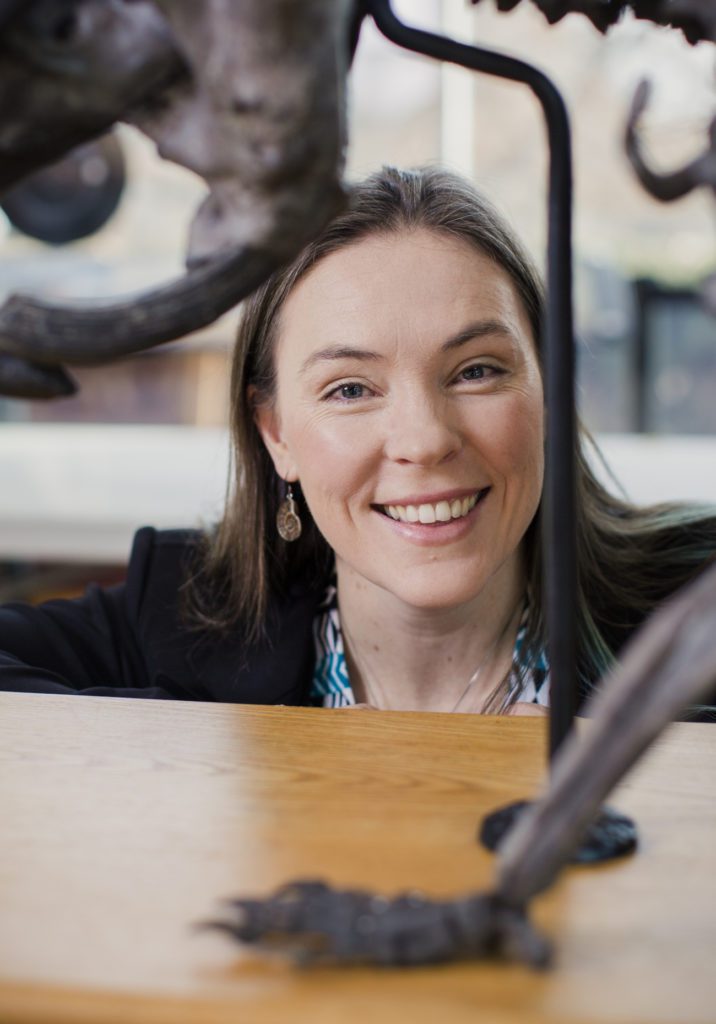
“It was important to me that everyone at the table felt ownership over the plan. Science can’t just extract data and present results. It has to support the community’s priorities.”
— Heather Lerner, professor of biology
By week’s end, the group had produced a plan later presented to government agencies and translated into the local dialect — a living framework for community-led research. The plan quickly moved from vision to action: replanting native species, protecting marine resources, and removing invasive mammals that threaten biodiversity. Lerner linked these efforts with Earlham students and international researchers, building a network grounded in trust and reciprocity. “Every project starts with listening and understanding,” she notes. “The community guides the work, and my role is to bring in tools and expertise that amplify their efforts.”
The collaboration also revealed how science and cultural knowledge can enrich one another. During a visit to the Fiji National Museum, Lerner saw pottery from Vorovoro that dates back to some of the earliest human settlements in Fiji and began studying the archaeological literature from prior excavations. Sharing this research with elders uncovered oral histories that align with the archaeological record — proof that science and tradition can tell the same story when they work in partnership.
“When the community’s perspective is central,” Lerner reflects, “the work gains meaning far beyond data or publications.”
***
About Earlham College
Earlham College and Earlham School of Religion foster a collaborative learning community that inspires and motivates students with transformative opportunities and experiences so they can become catalysts for good in a changing world. Located in Richmond, Indiana, Earlham is one of U.S. News & World Report’s Top 100 national liberal arts colleges and offers one of the top 20 classroom experiences in the nation, according to the Princeton Review.
Media contact
Brian Zimmerman
Assistant vice president of marketing and communications
Email: [email protected]
Phone: 765.983.1256